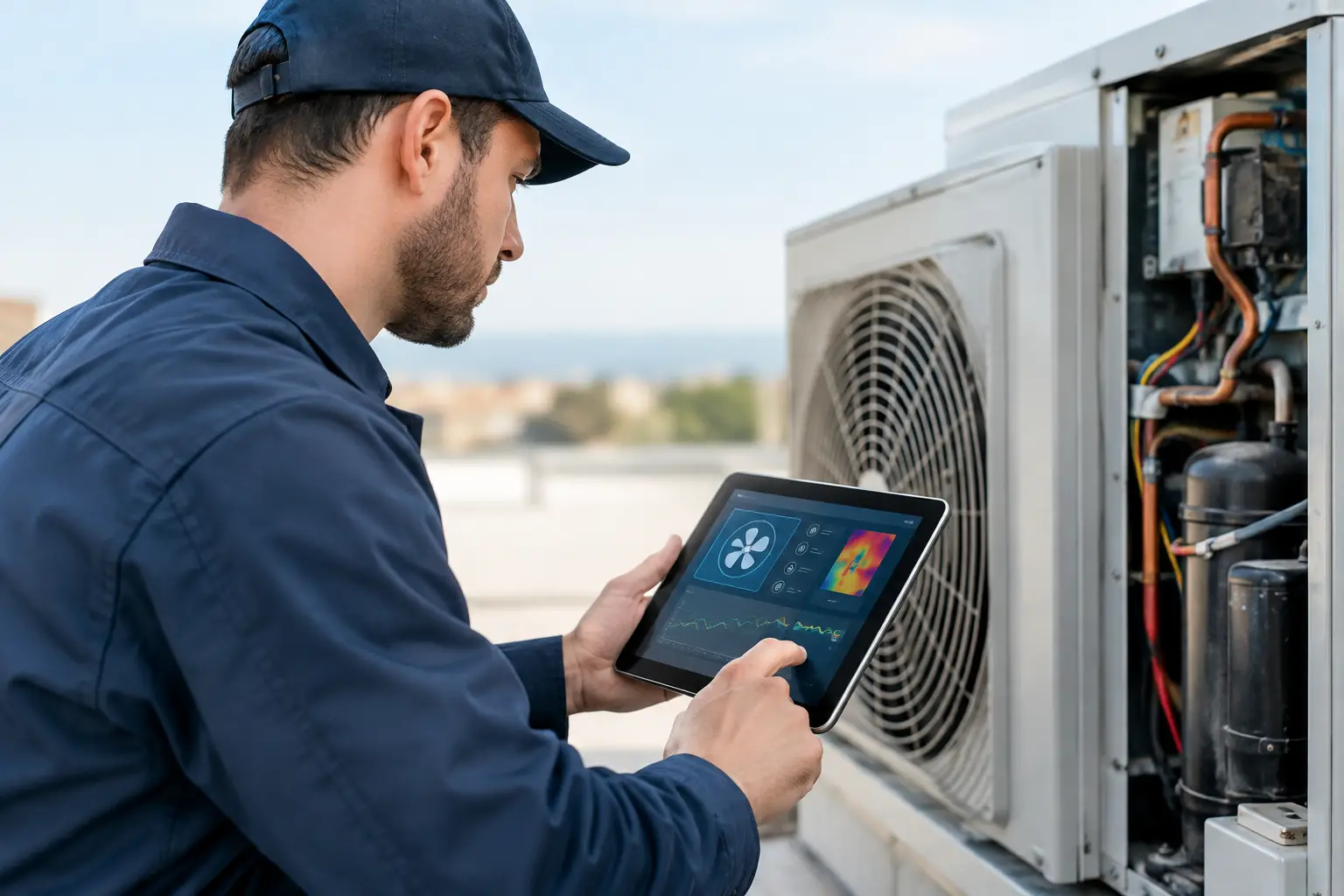
A no-cool call with a blinking fault code can turn into an hour of callbacks, manual searches, phone calls, and parts guesses. AI HVAC troubleshooting trends are getting attention because they can shorten that search. The useful question for contractors is not whether AI can replace a technician. It cannot. The question is where it can remove delay from the diagnostic process without adding another confusing app to the truck.
For field service, the best use of AI is practical problem solving. It should help a technician find relevant information, sort likely causes, document observations, and recognize when a condition needs more testing. It should not turn a diagnosis into a blind recommendation.
AI HVAC Troubleshooting Trends That Matter in the Field
The most valuable changes are not flashy. They involve getting the right technical information in front of the right person before a small uncertainty becomes a bad decision.
Guided symptom-to-test workflows
A technician may start with a plain-language issue: outdoor unit runs but the supply air is warm, a furnace starts then drops out, or a mini-split is flashing a code. AI-assisted tools can take that starting point and organize the next checks by system type, operating mode, and symptom.
A useful workflow does not simply say to check everything. It narrows the path: verify thermostat call, confirm line voltage, check low-voltage control signals, inspect safeties, then evaluate component operation. The technician still performs the tests and interprets the readings. AI helps put the tests in a sensible order.
This matters most for less common equipment, unfamiliar brands, and intermittent problems. A senior technician may already have the sequence in memory. A newer technician may know the individual tests but lose time deciding which test comes first.
Faster access to manuals and fault-code information
Equipment literature is necessary, but it is not always field-friendly. A technician may have a 260-page manual, a photo of a model number, and a customer waiting for an answer. Search tools that can identify relevant sections, wiring references, sequence-of-operation details, and fault-code definitions can save real time.
The trade-off is accuracy. Model numbers, revisions, control boards, and communication protocols matter. A recommendation based on a similar unit is not the same as guidance for the unit in front of the technician. Any AI-generated answer should be checked against the correct manufacturer documentation before parts are ordered or wiring is changed.
That makes organized, searchable technical resources more valuable than a generic chatbot response. The system needs to help technicians find the source, not hide it.
Pattern recognition from operating data
Another trend is using AI to review data points that technicians already collect. Pressures, temperatures, amp draws, static pressure, superheat, subcooling, fault history, and run times can reveal patterns that are hard to spot when viewed one reading at a time.
For example, a tool may flag a combination of low airflow indicators and coil temperature behavior that points the technician toward an airflow restriction before a refrigerant charge adjustment is considered. It may identify recurring communication faults across a certain equipment line. It may also show that a repeated failure is tied to a specific installation condition rather than a defective replacement part.
Pattern recognition is helpful when there is enough reliable information. It is less useful when readings are incomplete, sensors are inaccurate, or the system has not been allowed to stabilize. AI can organize clues. It cannot make bad measurements trustworthy.
Better use of photos, notes, and field language
Technicians do not always describe a problem in manufacturer terminology. They may write condenser fan cycling, board humming, or liquid line sweating back to the compressor. Newer AI tools can translate everyday field notes into useful search terms, checklists, or likely diagnostic branches.
Image-based assistance is also improving. A clear photo of a wiring diagram, rating plate, control board, or error display can be easier to work from than manually typing every detail. But photo tools have limits. Glare, low resolution, incorrect wire identification, and missing context can create a confident-looking but incorrect result.
The technician should treat image recognition as a way to gather information faster, not as confirmation that a component has failed.
Where AI Still Needs a Technician
HVAC systems operate in real buildings with real variables. A model may suggest a failed capacitor based on a symptom description, but it cannot feel a loose terminal, hear a relay chatter under load, smell overheated insulation, or recognize that a homeowner changed the thermostat schedule.
It also cannot take responsibility for safety. Electrical lockout procedures, gas leak checks, combustion analysis, refrigerant handling, and verification after repair remain technician work. AI should never encourage someone to skip meter verification, bypass a safety, or replace a part without testing.
Context matters just as much. A high static pressure reading may point toward a restrictive filter, closed dampers, undersized ductwork, a dirty coil, or a return-air problem. The right answer depends on measurements and site conditions. The goal is not to get an instant verdict. The goal is to reach the next valid test with less wasted motion.
What Contractors Should Look for Before Adopting AI
The right tool should fit the way technicians already work. If it requires repeated logins, long prompts, or a new process for every service call, adoption will be weak. Field tools need to be quick enough to use while standing beside equipment.
Look for a system that supports practical tasks: finding manuals, following guided diagnostics, using calculators, saving common fixes, and sharing useful field knowledge. Information should stay organized in one account-based workspace instead of scattering across personal texts, screenshots, paper notes, and disconnected apps.
Contractors should also ask how information is handled. Service notes, equipment details, customer addresses, and photos may contain sensitive business information. Know what is stored, who can access it, whether content is used to train outside systems, and how records can be corrected or removed. A useful diagnostic tool should not create a data-control problem.
Training is another deciding factor. AI does not remove the need for technician development. In fact, the best implementations use it to reinforce a consistent process. A junior technician can learn why a test is being performed. A lead technician can capture a hard-won fix so the rest of the team does not start from zero the next time the issue appears.
Building a Practical AI-Assisted Diagnostic Process
Start small. Choose one use case that causes repeated delay, such as locating model-specific manuals, identifying fault codes, or building consistent no-heat and no-cool diagnostic paths. Measure whether technicians find answers faster and whether the repair is confirmed on the first visit.
Set a clear rule: AI suggestions are starting points, not final diagnoses. Every recommendation that affects safety, wiring, refrigerant charge, combustion, or part replacement must be verified with the correct test procedure and manufacturer information.
Next, build a shared knowledge habit. When a technician finds an unusual fix, record the symptom, model, measurements, root cause, repair, and verification result. Short entries with usable details are more valuable than vague notes that say replaced board and working now. A forum-style discussion area can preserve that field experience for the next technician who sees the same problem.
HVAC Assist Pro fits this practical direction by keeping guided instructions, manuals, tools, calculators, and shared technician discussion focused on one job: helping technicians solve problems in the field. The value is not replacing judgment. It is making the information behind good judgment easier to reach.
The Trend to Watch Is Better Decisions, Not More Automation
The strongest AI HVAC troubleshooting trends will be the ones that make skilled work more consistent. They will reduce time spent hunting for documentation, help newer technicians follow sound test sequences, and keep proven field knowledge available when the original technician is not answering the phone.
A good diagnostic process still starts with listening to the complaint, confirming operating conditions, measuring carefully, and verifying the repair. Use AI to clear the clutter around those steps. The technician, the meter, and the equipment in front of them still decide what is true.